The Protection System
What goes on the steel, what has to happen to the steel first, and how long the asset is down.
Request the Maintenance Data PackageStopping the Cell, Not Erasing the Rust
Iron oxidizes when metal, oxygen, and an electrolyte are in contact at the same time. Remove any one and the reaction halts. On new steel the industry removes the oxide and starts clean. On in-service steel you can achieve the same result by removing the water and the oxygen instead.
That is what a continuous, thick-film, 100% solids membrane does. OR93BL is applied by plural-component spray at roughly 160°F and 2,000 PSI, mixes at the gun, and polymerizes on the substrate within 3 to 6 seconds. Nothing evaporates and nothing shrinks, so the film has no solvent voids and no pinholes for diffusion to exploit. At 20 to 60 mils, oxygen and water transmission are effectively negligible.
The membrane also has to survive the asset's behavior. In-service steel moves: thermal cycling, live loads, vibration from drives and conveyors. A hard, brittle maintenance coating cracks at those stress concentrations, and a crack in a barrier coating is worse than no coating at all because it channels water to one spot. Polyurea elongates 300 to 400% and tears at 400 to 500 pli — it moves with the structure.
Where the steel has lost section, none of this applies. Coating is not structural repair. Get thickness readings first.
OR93BL — Maintenance-Relevant Properties
| Property | Value |
|---|---|
| Solids by volume | 100% — no solvent, no shrinkage |
| Maintenance DFT over tight rust | 20 – 40 mil |
| DFT for extended asset life | 40 – 60 mil |
| Gel time | 3 – 6 seconds |
| Tack-free time | 10 – 30 seconds |
| Return to service | Typically under 1 hour |
| Elongation | 300 – 400% |
| Tear strength | 400 – 500 pli |
| Tensile strength | 2,500 – 3,000 PSI |
| Shore D hardness | 45 – 50 |
| Adhesion, blasted steel | > 500 PSI pull-off |
| Service temperature | -40°F to 250°F |
| Recoat window | 6 hours with no re-prep |
| Field repair | Abrade, 7001 primer, respray |
| Coverage | 1,604 mil-sq-ft per gallon |
Prep on an In-Service Asset
SSPC-SP3 power-tool cleaning is the maintenance standard. Needle guns, wire wheels, and sanders remove loose scale, flaking paint, and non-adherent oxide, leaving sound tight rust and well-bonded existing coating in place. This carries a reduced-warranty note and is the practical basis for most in-service work — no containment, no abrasive disposal, no shutdown extension.
SSPC-SP6 commercial blast where the asset can be taken down, isolated, and blasted. This earns the full warranty and the 500+ PSI adhesion figure. Worth doing on high-consequence assets and anything with a long remaining life.
The loose-scale test: if you can lift it with a putty knife, it has to come off. There is no version of this that works over material the membrane can peel away with.
Contamination: Degrease before abrading, not after — abrading first drives oil into the profile. Super Orange Cleaner handles most industrial soils. Then verify chlorides below 7 µg/cm² in any salt or wash-down environment.
Existing coatings: Aged alkyd, epoxy, and urethane systems generally accept 7001 primer, which also stops bleed-through from the original finish. Do an adhesion test on a small area before committing to a large run — if the old coating fails cohesively, it all has to come off.
Moisture: The substrate must be above dew point and dry at the time of spray. Fast-set chemistry tolerates ambient humidity far better than conventional coatings, but it will not bond through standing condensation.
Matching Grade to Remaining Service
OR93BL — the default for structure, enclosures, roofs, and anything where the enemy is weather and condensation. Best coverage per dollar and the right call for large-area maintenance.
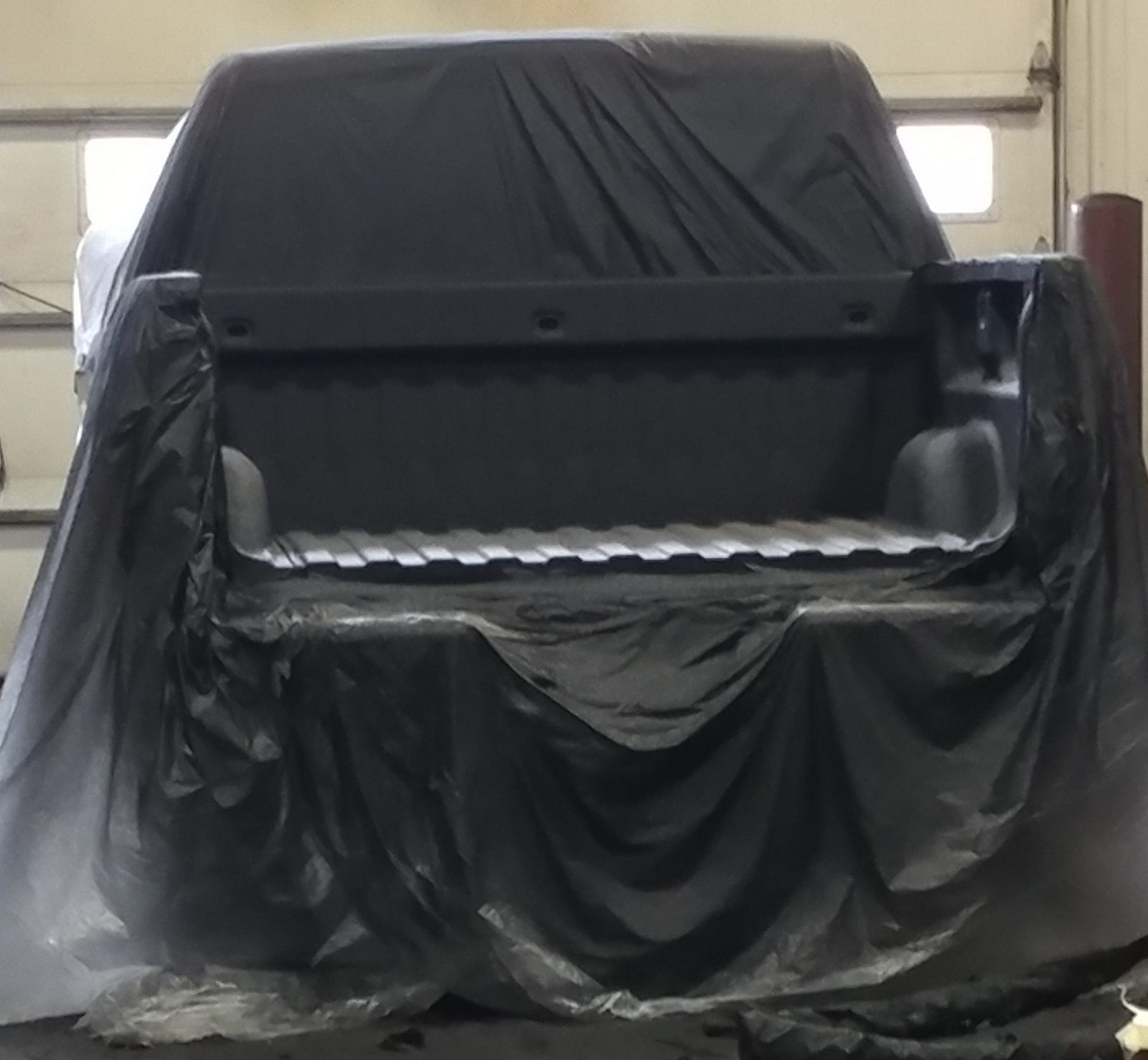
Flak Jacket 1 (FJ1) — where the protected surface still gets used: walkways, platforms, equipment decks, truck and trailer beds, aging metal roof panels that maintenance crews walk on.
Flak Jacket Pro — for worn contact surfaces. Chutes, hoppers, skirtboards, and liners where material flow has already ground the steel thin and the membrane now takes that abrasion instead.
7001 Primer — used far more in maintenance than in new work, because maintenance substrates are mixed. Galvanized, painted, concrete, wood, and membrane all in one asset is normal, and 7001 lets one polyurea spec span them.
Need the Maintenance Documentation?
TDS, SDS, overcoating guidance, and a written prep procedure you can hand to your millwrights or your coating contractor.
Request DocumentationGet a Maintenance Spec
Tell us about your project and we will follow up with product details, technical data sheets, and pricing.